
This week, I immersed myself in the finale of Love is Blind Season 6, a reality show that asks participants to accelerate their journey to marriage through an unconventional experiment. If you haven’t watched yet, save time and jump into the season’s finale, particularly Episode 12, from 49 to the 59-minute. In the unique social experiment, participants date within isolated pods, unable to see their potential partners. For me, the heart of this season was AD’s narrative. As the sole Black woman in the pods, her engagement to Clay became a focal point, revealing layers of complexity and resilience.
Redefining Strength: Squats and Jesus
After the pods (episode 6), selected couples went on a honeymoon, and this was the first time that participants had seen each other outside of their gendered housing. During one of the hangouts at the beach. Jimmy made a private comment to his betrothed, Chelsea, about AD’s body and mentioned that she was “stacked.” Chelsea then yells to AD, “Hey Girl, how did you get a butt like that?” AD replies, “Squats and Jesus.”
“Squats and Jesus” isn’t just a catchy quip; it embodies the essence of perseverance and belief. For too long, Black women have navigated a world where their achievements are questioned and their bodies scrutinized. Yet, through it all, we persist, fueled by a potent combination of determination and faith. So, the next time doubt creeps in, remember AD’s resolute proclamation: “Squats and Jesus.”
Note: This episode was challenging from an anti-Black perspective. Chelsea is giving white tears because she becomes insecure while Jimmy talks with AD. Jimmy is only talking to AD because he becomes awkward after Chelsea makes his private comment public (foreshadowing a bigger issue later in the season). Also, there’s the larger context of publicly sexualizing the only Black woman on the show. (google LiB Bean Dip for greater context).
Resilience in Adversity: “We Good”
Fast forward to the season finale, where heartbreak looms large as Clay falters at the altar. In that moment of vulnerability, AD’s response speaks volumes. Amidst the chaos and disappointment, her mother’s simple yet profound declaration echoes a sentiment familiar to many Black women: “We Good.”
“We Good” isn’t just a phrase; it’s a declaration of resilience and solidarity. It signifies a boundary drawn, a line in the sand that reaffirms self-worth and mutual support. Black women find strength in unity and solidarity in a world that often seeks to diminish their voices. It reminds us of the circles of protection we build around each other, affirming that we stand together no matter the circumstances.
Embracing Transitions: Graceful Exits
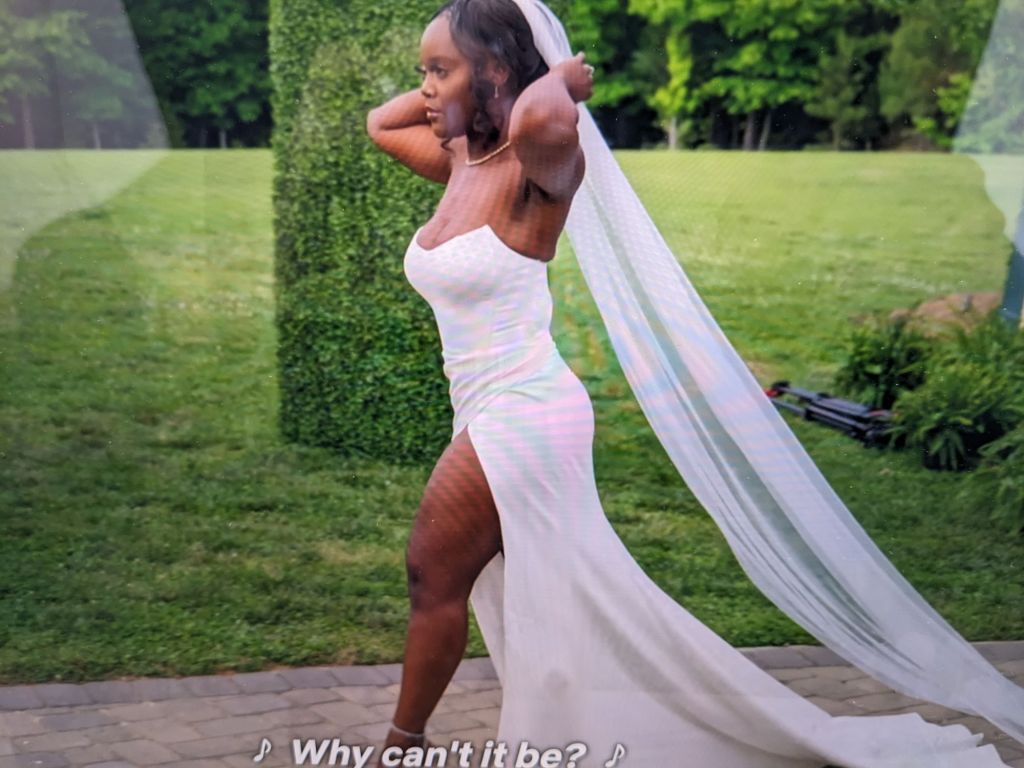
There’s a powerful visual of AD exiting the ceremony that speaks volumes. In her departure, she embodies a lesson that transcends the confines of reality television. The ability to recognize when a chapter has ended and to depart with dignity is a skill worth cultivating.
In the same vein, many of us have faced moments of transition and change. Whether leaving a job, a relationship, or a venture, the power lies in knowing when to walk away and how to do so with grace. It’s about honoring oneself and acknowledging that endings pave the way for new beginnings.
Discover more from Hadiyah Mujhid
Subscribe to get the latest posts sent to your email.

 Hadiyah Mujhid